| Minnesota Tint Laws | ||
|---|---|---|
| Sedan | SUV | |
| Front Windshield | None allowed | None allowed |
| Front Side Windows | 50% | 50% |
| Back Side Windows | 50% | 50% * |
| Rear Windshield | 50% | 50% * |
* Minnesota laws specifically allow any darkness tint on rear windows of pickup trucks, and side and rear windows of vans. Most states allow this for all multipurpose vehicles such as SUVs. Unless manufactured as such, legally it is not permitted to add aftermarket tint on back windows of SUVs darker than 50%.
Quick summary: Minnesota doesn't allow any aftermarket tint on front windshields, even on AS-1 line. All other windows can have down to 50% VLT. Exceptions are made for pickup trucks and vans, where windows behind driver can have darker tint.
Last updated on: . Confirmed accurate for 2026. Attorney verified
Minnesota tint laws primarily regulate the darkness, but also specify other rules and regulations you need to know about such as reflectiveness or color restrictions. All laws are explained further below.
Window Tint Darkness in Minnesota
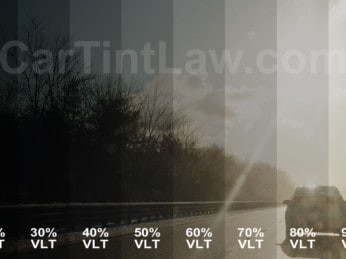
Window tint darkness is measured in VLT (Visible Light Transmission) percent. VLT indicates how much light passes through both the film and the glass.
Drag the blue slider above to preview tint darkness. In most real world cases, applied tint will appear 10-20% darker compared to our tool.
See: VLT explained with chart and darkness examples
How dark can your window tint be in Minnesota?
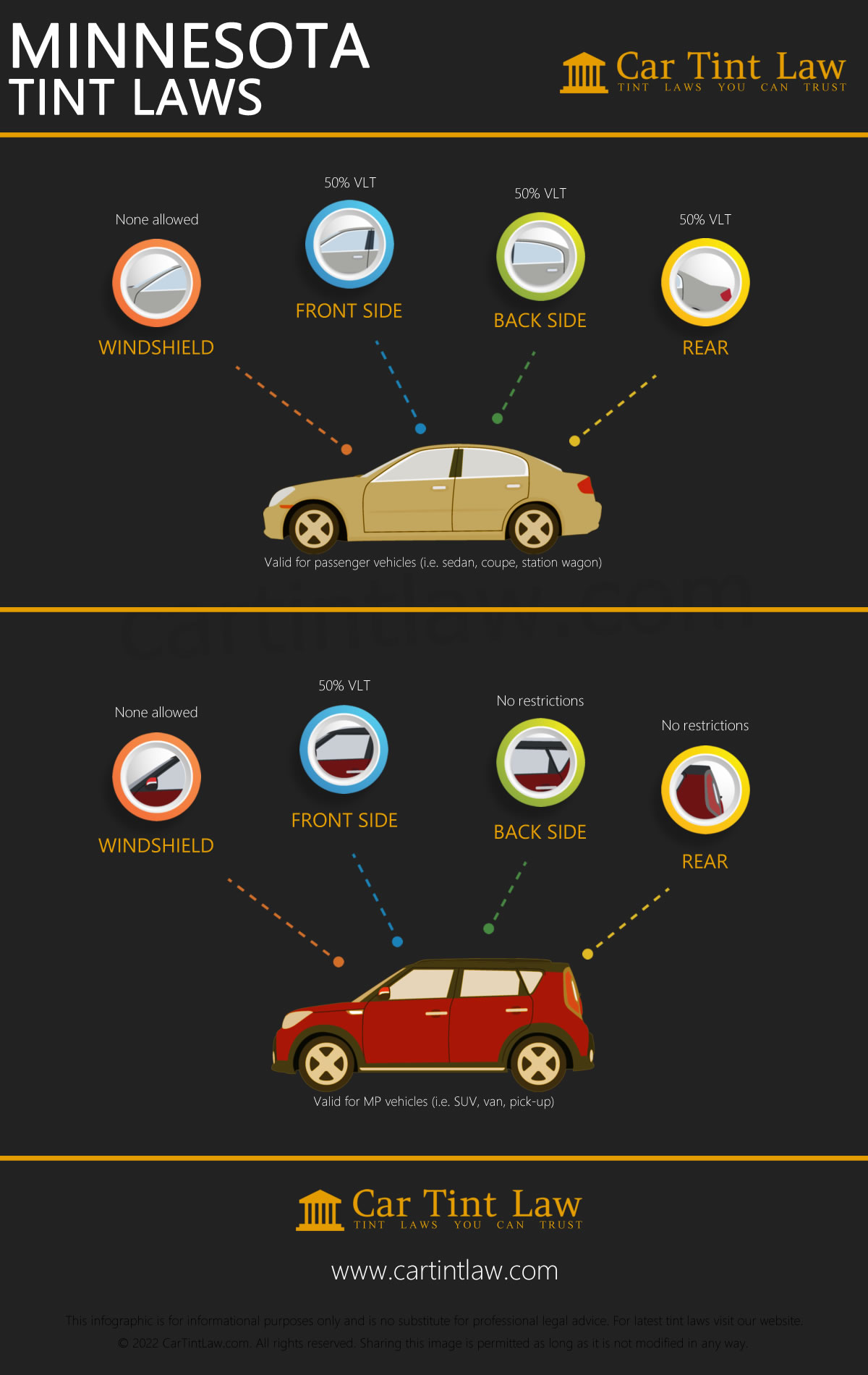
Here's exactly how much VLT is allowed on your auto window tint in Minnesota (MN), categorized by passenger and multi-purpose vehicles.
Tint darkness for passenger vehicles:
- Windshield: No tint is allowed on the windshield.
- Front side windows: Must allow more than 50% of light in.
- Back side windows: Must allow more than 50% of light in.
- Rear window: Must allow more than 50% of light in.
Passenger vehicles include: sedan, coupe, convertible, station wagon, hardtop and hatchback vehicles.
Tint darkness for multi-purpose vehicles (MPV):
- Windshield: No tint is allowed on the windshield.
- Front side windows: Must allow more than 50% of light in.
- Back side windows: Any darkness can be used.
- Rear window: Any darkness can be used.
Multi-purpose vehicles include: SUV, pickup, van, truck, RV, and minibus.
AS-1 line typically extends between 4 and 6 inches parallel to the top of your windshield. AS-1 designation line is typically marked by glass manufacturer on the top edge of your windshield.
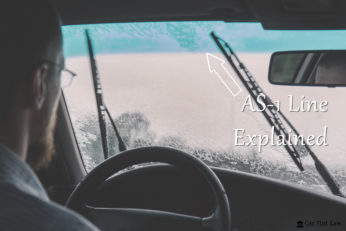
Depending on vehicle, your AS-1 strip may already be tinted. In most states windshield tint must not have any reflectiveness, and illegal colors typically include blue and red.
Some state tint laws specify exact number of inches you are allowed to tint on front windshields. Other states define this windscreen area simply as an AS-1 line. Learn more about AS-1 Line.
Federal vehicle ID label found on driver's front door frame will tell you whether your vehicle is classified as passenger or multi purpose vehicle.
- Passenger vehicles include: sedan, coupe, convertible, station wagon, hardtop and hatchback vehicles.
- Multi-purpose vehicles include: SUV, pickup, van, truck, RV, trailer, bus and minibus.
In most states vehicles fall under these two categories.
Other Minnesota Tinting Rules & Regulations:
Other laws, rules and regulations in Minnesota include the following:
Zero reflectiveness on front windshield, other windows must not be more than 20% reflective.
There are no restrictions or requirements for side mirrors in Minnesota.
No tint colors are explicitly restricted from use.
Manufacturers do NOT need to certify the film they sell in the state.
The sticker to identify light transmission and reflection percent is required on every tinted window.
Medical Exemptions
Medical exemptions for window tint can be given to vehicle drivers, or passengers (sibling, spouse, parent, child, grandparent, grandchild, or persons for whom the driver is a personal care attendant). They must possess a prescription or a physician’s or optometrist’s statement of medical need to be shielded from the sun.
This statement must also mention minimum VLT to satisfy the needs of a vehicle occupant. Furthermore, the statement must have an expiration date no more than 2 years, after which it must be renewed. After 2025’s law amendments, if medical condition is permanent then it is possible to obtain a medical waiver without an expiration.
You do not need to register the medical exemption with the Minnesota Department of Public Safety (DPS-DVS). The physical prescription or doctor’s statement acts as your proof and must be kept in the vehicle at all times.
Quick FAQs
A window tint violation in Minnesota is classified as a petty misdemeanor (or non-moving violation) and typically results in a fine ranging from about $100 to $300, depending on the county.
For example, Itasca County sets the standard fine for an illegal window tint at $135 (source), while other jurisdictions or combined court surcharges can push the total closer to $125 to $164+.
Subsequent offenses can have harsher penalties. Some officers or jurisdictions issue a warning or a “fix-it” ticket allowing you to remove the tint and show proof to get the fee reduced or dismissed.
Side and rear windows of funeral vehicles, limousines, and police vehicles are exempt.
Laws typically do not apply to vehicles registered in other states, but to avoid fines during out of state travels you can considering carrying proof that the tint you have is legal in your home state.
Tint laws only regulate aftermarket tinting, so vehicles manufactured with darker windows are excluded.
Visible light transmission (VLT) measures how much visible light passes through a vehicle window. Law enforcement often uses a tint meter device to measure VLT. However, tint meters are not always perfectly accurate, and readings can vary slightly due to the equipment or measurement conditions.
To account for these small differences, Minnesota allows a variance of 3% when measuring window tint. As tint meters are not 100% accurate, the tolerance should never be used to apply darker than legally permitted tint.
The last meaningful legislative change to Minnesota tint laws was made in 2025.
Our website is updated continuously. The latest major change is detailed below:
- November 3, 2026: Added more specific information about penalties.
- October 28, 2026: Added information about medical exemptions, exempted vehicles, and penalties.
- April 24, 2025: Governor Tim Walz signed the Senate File 1075 allowing medical exemptions to be permanent.
Our tint laws strictly reference official sources. You are welcome to verify data in official state laws linked below, or get in touch with your local DMV or police department to make sure you are not breaking Minnesota window tinting laws, rules and regulations.
Our article about Minnesota tint laws is up to date as of 2026. Last change was made on November 3rd, 2026 (approximately 18 days ago).
You can rest assured our legal experts are immediately notified of changes, and will always update this article with latest legislation when required.
Official law sources:
More Minnesota traffic law questions?
Our partnered traffic lawyers are always online and ready to answer your questions. Get immediate answers from real attorneys and experts in their field! Ask a question now »
Ask a lawyer »