| HAWAII Tint Laws | |
|---|---|
| Front Windshield | Top 4 inches |
| Front Side Windows | 35% |
| Back Side Windows | Any darkness |
| Rear Windshield | Any darkness |
Hawaii amended tint laws in 2025, and now allows any darkness on windows behind driver on all vehicles. Most other online resources still display outdated information.
Quick summary: Hawaii tint laws permit front windshield tint only on top 4 inches or the AS-1 line. Front side windows can have 35% VLT. All windows behind driver can any darkness.
Last updated on: . Confirmed accurate for 2026. Attorney verified
Hawaii tint laws primarily regulate the darkness, but also specify other rules and regulations you need to know about such as reflectiveness or color restrictions. All laws are explained further below.
Window Tint Darkness in Hawaii
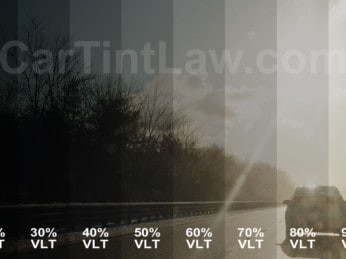
Window tint darkness is measured in VLT (Visible Light Transmission) percent. VLT indicates how much light passes through both the film and the glass.
Drag the blue slider above to preview tint darkness. In most real world cases, applied tint will appear 10-20% darker compared to our tool.
See: VLT explained with chart and darkness examples
How dark can your window tint be in Hawaii?
Here's exactly how much VLT is allowed on your auto window tint in Hawaii (HI), categorized by passenger and multi-purpose vehicles.
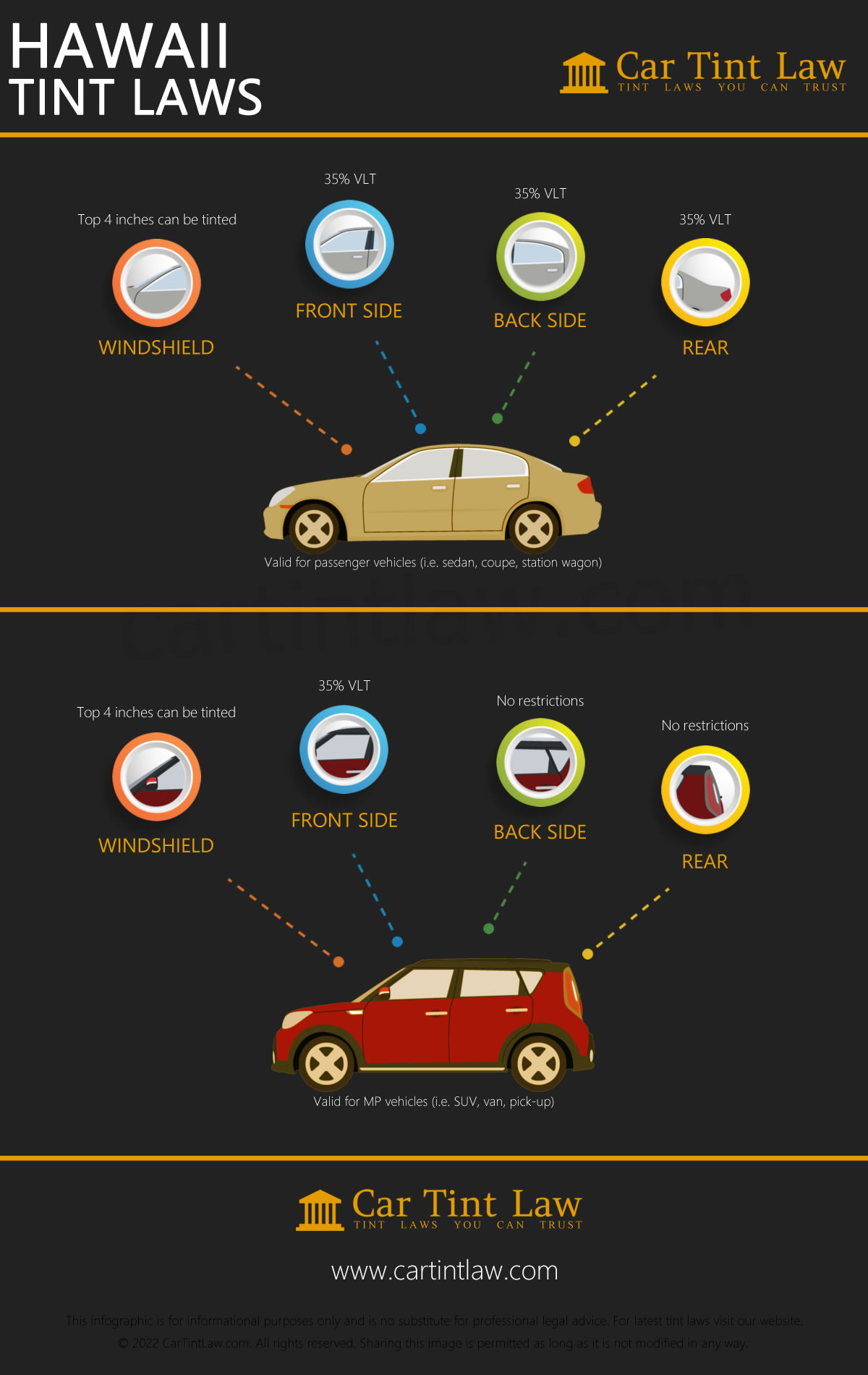
Tint darkness for passenger vehicles:
- Windshield: Non-reflective tint is allowed on the top 4 inches of the windshield, or AS-1 mark if exists.
- Front side windows: Must allow more than 35% of light in.
- Back side windows: Any darkness can be used.
- Rear window: Any darkness can be used.
Passenger vehicles include: sedan, coupe, convertible, station wagon, hardtop and hatchback vehicles.
Tint darkness for multi-purpose vehicles (MPV):
- Windshield: Non-reflective tint is allowed on the top 4 inches of the windshield or AS-1 mark if exists.
- Front side windows: Must allow more than 35% of light in.
- Back side windows: Any darkness can be used.
- Rear window: Any darkness can be used.
Multi-purpose vehicles include: SUV, pickup, van, truck, RV, and minibus.
AS-1 line typically extends between 4 and 6 inches parallel to the top of your windshield. AS-1 designation line is typically marked by glass manufacturer on the top edge of your windshield.
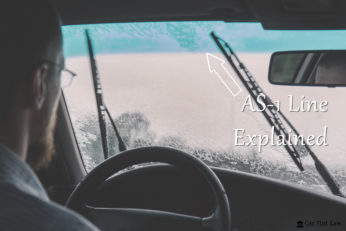
Depending on vehicle, your AS-1 strip may already be tinted. In most states windshield tint must not have any reflectiveness, and illegal colors typically include blue and red.
Some state tint laws specify exact number of inches you are allowed to tint on front windshields. Other states define this windscreen area simply as an AS-1 line. Learn more about AS-1 Line.
Federal vehicle ID label found on driver's front door frame will tell you whether your vehicle is classified as passenger or multi purpose vehicle.
- Passenger vehicles include: sedan, coupe, convertible, station wagon, hardtop and hatchback vehicles.
- Multi-purpose vehicles include: SUV, pickup, van, truck, RV, trailer, bus and minibus.
In most states vehicles fall under these two categories.
Other Hawaii Tinting Rules & Regulations:
Other laws, rules and regulations in Hawaii include the following:
No metallic or mirrored appearance allowed.
Dual side mirrors are required if back window is tinted.
Red, yellow, amber and blue are banned.
Film manufacturers are not required to certify the film they sell in this state.
Stickers on windows are not specifically required, but vehicle owner must have a receipt or certificate from installer in vehicle at all times.
Hawaii law does NOT allow medical exemptions that would allow using darker tint.
Quick FAQs
Under latest laws with increased fines in 2025, vehicles owners are liable for $300 to $550 fine for each separate offense. Business owners or installers who violate tint laws must pay from $700 to $1,200 for each separate offense.
Also introduced in 2025’s law amendment, drivers and passengers with tinted windows must always roll down windows when stopped by law enforcement. Failure is a noncriminal traffic infraction.
Visible light transmission (VLT) measures how much visible light passes through a vehicle window. Law enforcement often uses a tint meter device to measure VLT. However, tint meters are not always perfectly accurate, and readings can vary slightly due to the equipment or measurement conditions.
To account for these small differences, Hawaii allows a variance of 6% when measuring window tint. As tint meters are not 100% accurate, the tolerance should never be used to apply darker than legally permitted tint.
The last meaningful legislative change to Hawaii tint laws was made in 2025.
Our website is updated continuously. The latest major change is detailed below:
- October 27, 2026: Added information on penalties.
- [LAW] May 29, 2025: Governor Josh Green signed the House Bill 226 into Act 129, updating Hawaii’s 1983 vehicular window tinting rules to equalize standards across all vehicle types. Sedans are now aligned with trucks, vans, and SUVs, allowing darker rear window options.
Our tint laws strictly reference official sources. You are welcome to verify data in official state laws linked below, or get in touch with your local DMV or police department to make sure you are not breaking Hawaii window tinting laws, rules and regulations.
Our article about Hawaii tint laws is up to date as of 2026. Last change was made on November 4th, 2026 (approximately 5 days ago).
You can rest assured our legal experts are immediately notified of changes, and will always update this article with latest legislation when required.
Official law sources:
More Hawaii traffic law questions?
Our partnered traffic lawyers are always online and ready to answer your questions. Get immediate answers from real attorneys and experts in their field! Ask a question now »
Ask a lawyer »